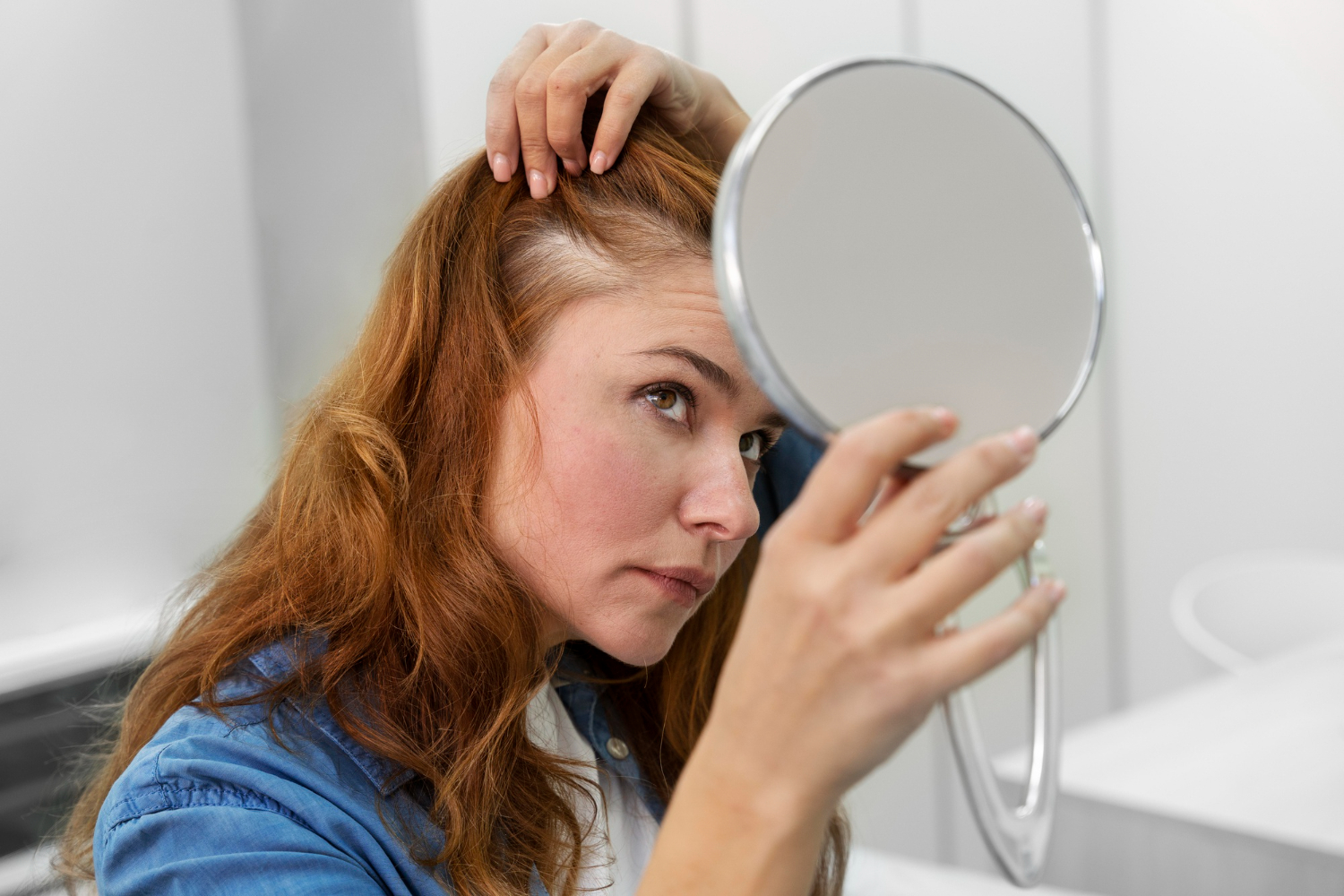
You notice it first in the shower. Then on your pillow. Then in your hair brush. More hair than you’re used to losing.
When you begin your weight loss journey with a GLP-1 medication like tirzepatide, you may begin to notice hair shedding. It’s not uncommon to see during rapid weight loss, but it may feel alarming if no one warned you it might happen. So, here’s what you should know.
For many people, hair loss may be a temporary side effect of rapid weight loss while taking tirzepatide. It has a name—telogen effluvium—a typical timeline, and there are ways to support hair regrowth.
This article breaks down what may cause tirzepatide hair loss, when it tends to stop, and what may help in the meantime.
Want to start a weight loss program with comprehensive support? CareBox is eager to help.
Hair shedding on tirzepatide might be caused by the weight loss itself, not a direct effect of the medication. Hair grows in cycles: an active growth phase, a resting phase, then shedding.
When your body experiences significant stress—think rapid calorie reduction, substantial weight loss, surgery, or illness—it shifts more follicles into the resting phase early. Then, weeks later, they may shed all at once.
This is called telogen effluvium (tell-OH-jen ef-LOO-vee-um). It’s a documented response to physical stress, described in a clinical review published by the National Institutes of Health.
Hair loss on tirzepatide does not necessarily mean your body is attacking your hair. Your body may be redirecting energy, and hair growth can be one thing that slows down.
In other words, tirzepatide may be suppressing appetite and supporting weight loss, and weight loss may trigger the shedding.
Women may be more likely to experience noticeable hair shedding on tirzepatide than men. Why?
A 2025 systematic review published in PMC analyzed 5 studies covering nearly 3,000 people on GLP-1 medications. Hair loss rates ranged from about 5% in controlled clinical settings to over 14% in real-world populations. Results vary.
Hair shedding doesn’t start overnight. By the time you notice your hair shedding, it’s likely to have started months ago—early on in your tirzepatide weight loss journey.
Here’s a brief timeline of what hair shedding during tirzepatide weight loss might look like:
Yes—for many people, hair loss from telogen effluvium (TE) may be temporary. TE doesn’t destroy your hair follicles; they just go dormant. When your body stabilizes, your hair may re-enter the growth phase.
Many people begin to see noticeable regrowth within 3 to 6 months of peak shedding slowing down, but results may vary.
In some cases, improved metabolic health from weight loss may support healthier hair growth over time. A 2024 case report by the American Academy of Dermatology described a patient who saw significant improvement in hair density within 6 months of starting tirzepatide for insulin resistance, without any additional hair treatments.
While there may not be a guaranteed way to prevent telogen effluvium, there may be a few steps to help reduce the severity of your hair loss or support earlier regrowth. Here are some things to consider:
Hair is made of protein. If you’re eating significantly less food, protein may be one thing you eat less of.
Prioritizing your protein intake while taking weight loss medication may help support healthy hair regrowth.
Low iron (specifically ferritin), low zinc, low B12, and low vitamin D may lead to increased hair shedding. Consider asking your licensed healthcare provider to check these before assuming weight loss may be a factor.
Faster weight loss often means more physical stress on the body. Talk to your care team before making any adjustments to your dose.
Telogen effluvium tends to resolve on its own. And stress can affect hair health (and your weight loss progress). So, try to prioritize stress management, emotional health, and getting enough sleep.
Concerned about hair loss during your weight loss program? Your CareBox care team is here to support you. Reach out today.
To give you a clearer picture, we reviewed the independent clinical evidence on GLP-1 medications and hair loss across multiple published studies.
Here’s what the data shows:
A consistent finding across these independent studies: the mechanism appears to be telogen effluvium from rapid weight loss, not direct follicular toxicity. The faster and more significant the weight loss, the higher the likelihood of shedding.
Telogen effluvium typically follows a recognizable pattern: gradual, diffuse hair shedding that begins weeks after a trigger, and typically resolves on its own.
Not all hair loss may fit that description. You may be experiencing hair loss from another cause if:
In some cases, seeing a dermatologist may be a next step to address concerns with hair loss.
Hair shedding on tirzepatide may be a response to rapid weight loss, rather than a direct effect of the medication. When your body loses weight quickly, it may shift hair follicles into a resting phase early—a condition called telogen effluvium. The shedding you see now may reflect changes that happened 2 to 3 months ago.
For many people, yes. Hair tends to grow back as the body stabilizes, whether you continue the medication or not. You may see noticeable regrowth within 3 to 6 months of shedding slowing down, but results vary.
Both medications may contribute to temporary hair shedding through the same mechanism: rapid weight loss. Tirzepatide may produce more significant weight loss which may contribute to more physical stress on the body. Individual results vary widely.
Reach out to your licensed healthcare provider if:
Your licensed healthcare provider may review your health history and determine whether additional testing or a specialist referral may be appropriate.
When you start with CareBox, a licensed healthcare provider reviews your health history to determine if you’re eligible for weight loss medication. Once prescribed, you get access to dedicated Care coaches and Registered Dietitians—a full support team.
Whether you want to start a weight loss program or get help with hair loss, CareBox is eager to support you throughout your journey.
If you’re already a customer and experiencing hair shedding, reach out to your care team. If you’re considering whether GLP-1 weight loss medication may be appropriate for you, consider getting started with CareBox today.
Talk to a licensed healthcare provider today to explore your options for weight loss or hair growth treatment.
The cause of hair loss on tirzepatide tends to be telogen effluvium, a natural stress response to rapid weight loss—not damage to your hair follicles caused by the medication. Many people see hair regrowth as your body begins to stabilize in your weight loss journey.
Some ways to help reduce the severity of your hair loss or support faster regrowth may include prioritizing protein, nutrient support, and practicing stress management.
Important Safety Information
CareBox connects customers with licensed providers who may prescribe medication through state-licensed pharmacies. Prescription medication is only available if prescribed after an online consultation, as applicable, with a healthcare provider. Physicians may prescribe compounded medications as needed to meet medical necessity or drug shortages. The FDA does not review or approve any compounded medications for safety or effectiveness. Results may vary. Please review the Important Safety Information.