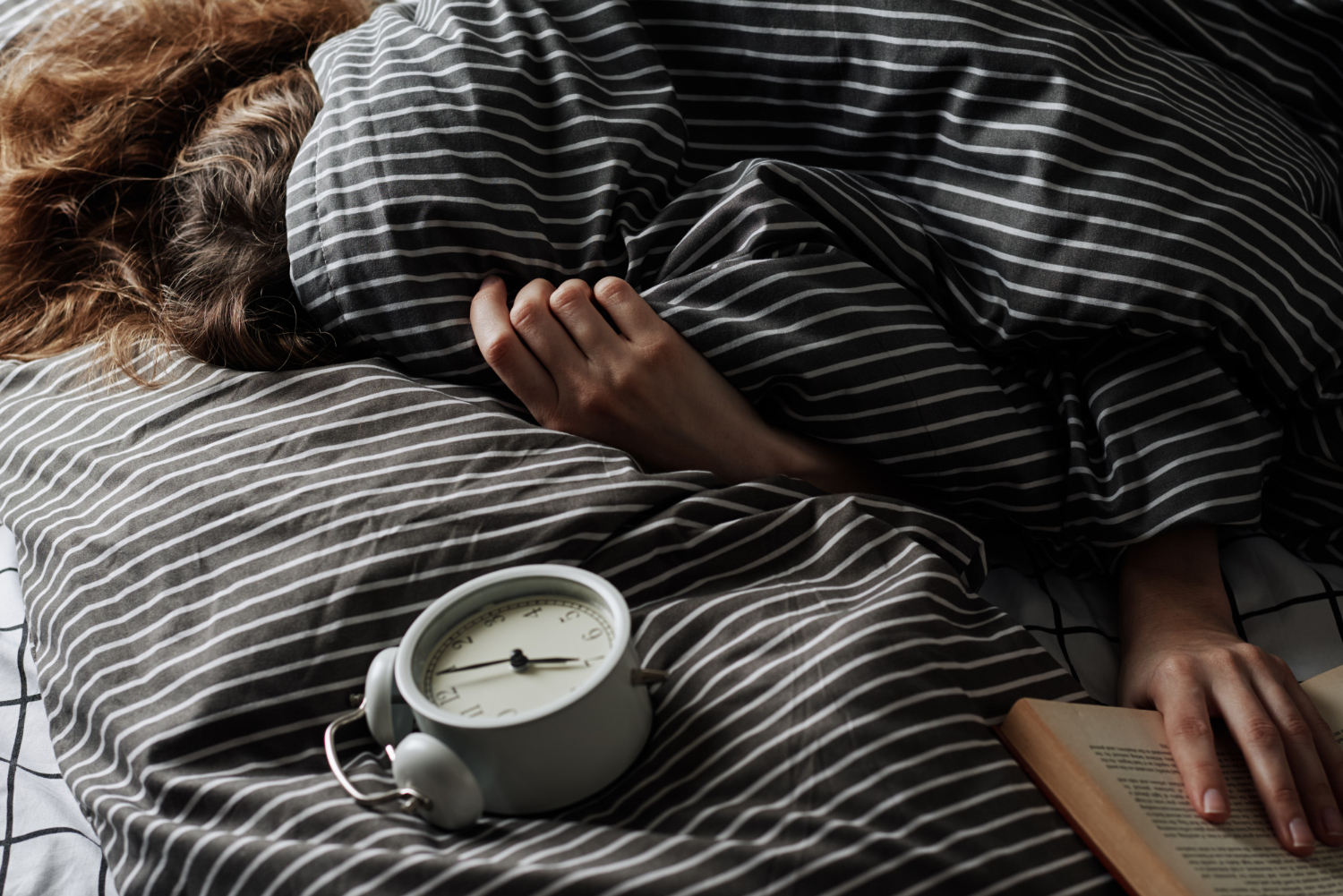
You wake up tired. By 10am, you're craving something sweet. By 9pm, the kitchen feels impossible to avoid.
Sound familiar?
Bad sleep doesn't just leave you exhausted. It can also change the way your body feels hunger. When you don't sleep enough, the hormones that control appetite can shift, and that can make cravings harder to manage.
This article explains why it may happen and offers simple suggestions you can try for better, healthier sleep.
Ready to start your weight loss journey with real support? Take the quiz.
Sleep is when your body repairs itself. It also resets the hormones that control appetite.
When you sleep less than 7 hours, your body may start to send mixed hunger signals. Research links short sleep (less than 7 hours a night) to a higher risk of weight gain.
A large study in PLOS Medicine found that people who slept less tended to weigh more. They also had higher levels of hunger hormones.
Sleep doesn't just affect how tired you feel. It can affect what you eat, and how much.
Two key hormones control whether you feel hungry or full:
When you don't get enough sleep, ghrelin may go up and leptin may go down. That combo can make your brain think you're hungrier than you are.
A study published in Annals of Internal Medicine found that just 2 nights of less sleep led to an 18% drop in leptin and a 28% rise in ghrelin. Hunger ratings went up 24%.
That's a big shift from just a couple of bad nights.
Ever notice that when you're tired, you don't crave salad? You want chips, chocolate, or something salty.
That's not a willpower problem. It's a hormone problem.
Poor sleep may also affect the brain's reward system, making high-calorie foods feel more appealing when you're tired.
Research from Stanford Lifestyle Medicine shows that sleep loss can activate the endocannabinoid system—the same system linked to food cravings and appetite.
It also notes that sleep-deprived people tend to eat more in the evening, when their willpower is already worn down.
So, if 9pm snacking has been a problem, your sleep schedule may be worth looking at first.
Want help managing cravings and weight with real clinical support? See if CareBox is right for you.
If you're between 40 and 65, you may already know this feeling: you used to sleep fine. Then something changed.
Perimenopause is the years before your period fully stops. During this time, estrogen and progesterone levels shift. Those shifts can make it much harder to fall and stay asleep.
Common sleep problems during perimenopause include:
Research found that sleep disorders affect 16% to 47% of women during perimenopause, and that number climbs higher after menopause.
The Endocrine Society also presented research showing that sleep disturbances in menopause may contribute to weight gain independent of estrogen levels.
In other words: even if hormones are the starting point, fixing sleep may help with weight loss.
You don't need a perfect sleep routine. A few small changes can make a real difference. Consider trying these healthier sleep habits:
Your body has an internal clock. It works best on a regular schedule.
When you wake and sleep at the same time each day, your body learns when to release sleep hormones. That makes it easier to fall asleep and wake up feeling rested.
Even on weekends, try to stay within an hour of your usual time. Sleeping in late on Saturday can throw off the whole week.
Your body temperature naturally drops when you fall asleep.
A cooler room—around 65 to 68 degrees—can help your body make that shift faster. For women dealing with hot flashes, a cool room may also reduce night sweats.
Blackout curtains or a sleep mask can also help. Even small amounts of light can signal your brain to stay awake.
Caffeine stays in your body longer than many people think.
It has a half-life of about 5 to 7 hours, which means half of a 2pm coffee may still be in your system at bedtime. That can make it harder to fall asleep, even if you don’t feel wired.
This includes tea, soda, and some pre-workout drinks. If you’re sensitive to caffeine, try cutting it off even earlier.
Screens emit blue light, which can tell your brain it’s still daytime. The blue light can delay sleep.
That delays the release of melatonin, the hormone that helps you feel sleepy. Even 30 minutes of screen-free time before bed can help your body start that wind-down process.
Try swapping your phone for something low-key: a book, light stretching, or just a few minutes of quiet. Your brain needs a signal that the day is done.
A wind-down routine doesn’t have to be complicated.
Even 10 to 15 minutes of something calm and predictable before bed can help your nervous system shift out of “go mode.” A warm shower or bath works especially well—the drop in body temperature after you get out can signal your body that it’s time to sleep.
Slow, deep breathing is another simple option. Try breathing in for 4 counts, holding for 4, and out for 6. Do this a few times and see if it helps you feel calmer.
Checking the time when you wake up at 3am often makes things worse. It can spike anxiety and make it harder to fall back asleep.
Your brain starts doing math—“I only have 3 hours left”—and that anxious thought can make it much harder to relax back into sleep.
Try turning your clock away from you or putting your phone face-down. If you can’t fall back asleep after 20 minutes, getting up for a few minutes of calm activity (like reading in dim light) is often better than lying there frustrated.
If waking at the same time every night is a pattern, mention it to your licensed healthcare provider.
None of these are instant fixes. But consistent habits, over time, may improve your sleep quality, which may support better hunger hormone balance and, in turn, make weight loss easier. Results vary.
Does Taking a GLP-1 Affect Sleep?
GLP-1 medications like compounded semaglutide and compounded tirzepatide are used for weight loss under licensed healthcare provider oversight.
Some people report sleeping better as they lose weight on a GLP-1. That may be because weight loss can reduce sleep apnea and discomfort at night.
Others notice changes in sleep in the first few weeks, which may be related to nausea or adjustment to the medication.
If you're using a GLP-1 and noticing changes in your sleep—better or worse—those changes are worth tracking. Talk to your licensed healthcare provider or Care Coach if sleep changes feel like a problem.
For full safety details, see Important Safety Information.
CareBox is a US-based telehealth service with licensed healthcare provider oversight.
When you join, you get:
No confusion. No mystery steps. Just a clear plan and a care team you can reach.
Talk to your licensed healthcare provider if:
You deserve support, not just a prescription. At CareBox, your care team includes a Care Coach and affordable access to a Registered Dietician who can help you look at sleep as part of the full picture of your health.
Take the first step. See if CareBox is a fit for you.
Bad sleep and weight gain are connected, and the link runs through your hormones.
When you sleep less, hunger hormones may shift. Cravings may get stronger. And your best intentions may feel harder to follow.
For women in perimenopause, sleep disruption adds another layer. But small, consistent changes to your sleep habits may make a real difference over time.
If weight loss is your goal, sleep is part of the plan, not an afterthought. Get started with CareBox.
Important Safety Information
CareBox connects customers with licensed providers who may prescribe medication through state-licensed pharmacies. Prescription medication is only available if prescribed after an online consultation, as applicable, with a healthcare provider. Physicians may prescribe compounded medications as needed to meet medical necessity or drug shortages. The FDA does not review or approve any compounded medications for safety or effectiveness. Results may vary. Please review the Important Safety Information.